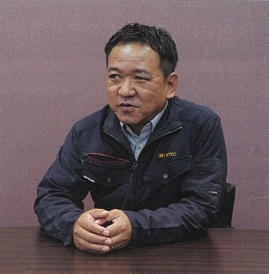
The front lines of electrical contracting are always a battle against time and preparation.
Since our founding in 1949, we have built up a 76-year history of technological capability and trust, supporting our local infrastructure.
There are many "traditions" in the construction industry that have remained unchanged since ancient times. The solid techniques of our craftsmen, the coordinated teamwork on site, and the experience handed down from senior to junior employees. These are things we must preserve; they are our pride.
Yet, on the other hand, it is also a fact that some customs and systems no longer fit the modern era, simply because "that's the way it has always been done." An overwhelming amount of paperwork, complex coordination efforts, and inefficient scheduling...
"While we must treasure and protect our traditions, we must also fearlessly update the customs that need to change. If we don’t, we won’t be able to protect the company in the years ahead, nor pass our skills down to the next generation."
With these thoughts in mind, I took my first major step toward smart-work in late December of last year.
Challenges and Dilemmas
At the time, we were using an industry-specific app to improve on-site efficiency. However, I harbored a constant dilemma: "If only we had a more intuitive system that perfectly fit our on-site workflow — something where we could move schedules around with a simple drag-and-drop — everyone would have a much easier time..."
It was around then that I happened to research Google’s latest AI. Looking at the screen, I felt goosebumps.
"...Wait, has AI really advanced this much?"
"With this, even if I don’t write programming code myself, I might be able to build a proprietary app dedicated to our company."
Trusting my intuition, I immediately started using Google's AI, "Gemini." At first, it was filled with technical jargon, and honestly, I didn't understand it at all.
Two Weeks of Self-Study
However, I refused to give up. I devoured tutorials, primarily focusing on explanatory videos on YouTube.
In between my regular duties, whenever I found a spare moment, I would open my screen, fire questions at Gemini, and put what I learned into practice. It was an intense, hands-on struggle alongside my daily workload.
After two weeks of relentlessly exploring the technology during work hours:
"Ah, this isn't just a passing trend. This is a weapon that can truly break through the outdated customs of our field."
What had started as skepticism turned into a solid "conviction" because I had spent those two weeks deeply engaged in hands-on learning.
I resolved to introduce Google Workspace and truly transform our corporate infrastructure.
Infrastructure Major Surgery
With high spirits, before I could even begin developing the app, I was confronted by a far more mundane and terrifying "giant wall." It was the major surgery of migrating our entire corporate infrastructure from Otsuka Shokai servers to Google Workspace.
To a specialist accustomed to server migrations, it might seem like a simple, everyday task. But to me, even with some baseline knowledge, this was our live production system. A single mistake could halt our email for days, throwing our operations into absolute chaos. The pressure of executing it was on a completely different level.
"DNS settings? Rewriting MX records? What on earth is that..."
Honestly, at the starting line, I was completely fumbling in the dark. Under normal circumstances, anyone would have thrown in the towel and outsourced it.
But I had the ultimate consultant available 24/7 to give me instant answers: Gemini.
During breaks in my work, whenever an error popped up, I consulted Gemini and fitted the puzzle pieces together exactly as instructed. Frankly, it was a nerve-wracking operation where I felt like I was holding my breath the entire time.
But... without losing a single email address, we successfully achieved a 100% complete migration to Google Workspace.
Birth of Our Custom App
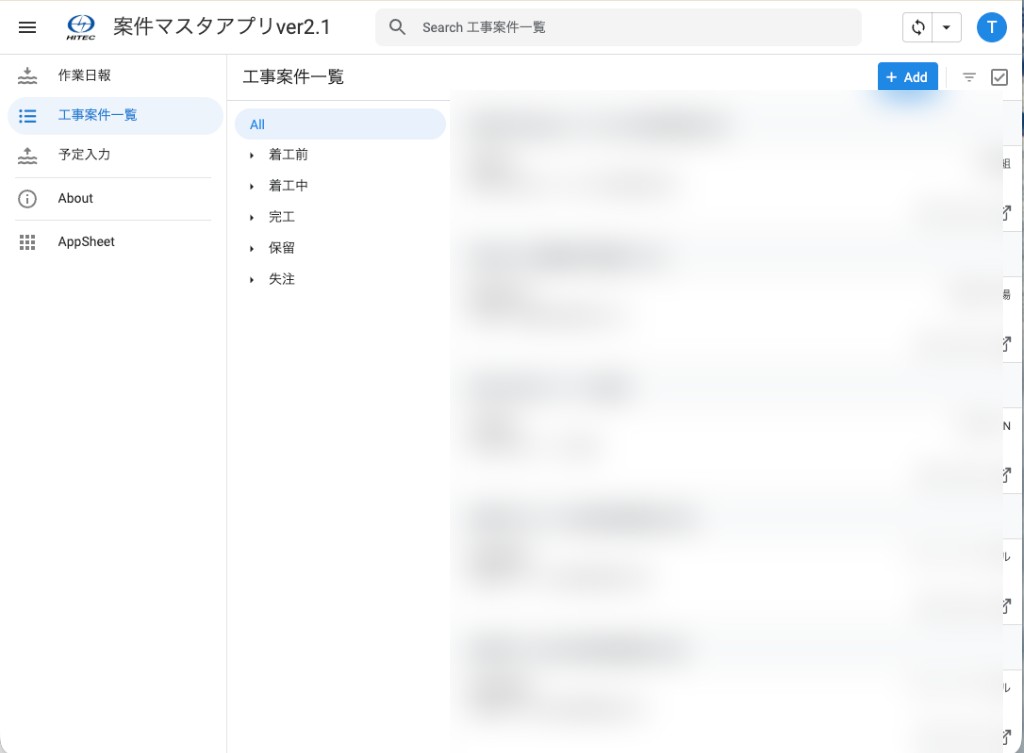
With the infrastructure in place, I was finally able to bring our long-awaited custom application (the Project Master App developed on AppSheet) to life.
When our corporate logo appeared on the mobile screen alongside neatly organized columns for "Before Construction," "Under Construction," and "Completed," I showed it to the employees, who had been watching me with amused skepticism, thinking, "The president is starting another project again... (laughs)."
Rather than asking, "Did you build this, President?", their response was one of pure admiration for the technology itself:
"...AI has really become that powerful, hasn't it?"
Even without programming knowledge, using AI allowed us to build a fully functional on-site app in just two weeks. Witnessing this fact firsthand, the employees were quietly moved, murmuring, "This is truly amazing."
What they had assumed was just a "sudden whim of the president" instantly transformed into excitement: "This might actually change our work on the ground."
Preserving our fine, long-standing traditions while smartly replacing outdated habits with the latest technology — this became the starting line of our new era of smart-work.
---
▶︎ Representative Column Episode 2